
Received a letter or doorstep visit from Resolve Call? They’re a debt collection agency based in Paisley, Scotland — not bailiffs.
They can’t enter your home or take your belongings. Here’s exactly what they can and can’t do, and how to deal with them.
Last reviewed: 30 May 2026
Quick Answers #
| Question | Answer |
|---|---|
| Can Resolve Call force entry to your home? | No — they’re debt collectors, not bailiffs |
| Are they legitimate? | Yes — FCA authorised (FRN 713946) |
| Can you ignore them? | Not recommended — they can take you to court |
| Can an IVA stop them? | Yes, if an IVA is suitable and the debt is included |
What You’ll Find on This Page #
- Who are Resolve Call?
- Why is Resolve Call contacting you?
- Can Resolve Call send bailiffs or force entry?
- Resolve Call doorstep visits — what actually happens
- What to do if Resolve Call contacts you
- Is your Resolve Call debt statute-barred?
- Can Resolve Call take you to court?
- How to stop Resolve Call with an IVA
- Breathing Space — 60 days’ protection
- “Resolve Call Solicitors” — is this a real law firm?
- The Andrew J Fenny address — why other websites have this wrong
- Who owns Resolve Call?
- How to complain
- Resolve Call reviews and reputation
- Contact Resolve Call
- FAQs
Who are Resolve Call? #
Resolve Call is a debt collection agency based in Paisley, Scotland. They chase unpaid debts on behalf of banks, utilities, and telecoms — or they buy old debts outright and chase them for profit.
Key facts:
- Company number: SC127277 (Scottish registration)
- FCA authorised: Yes — FRN 713946 (directly authorised, not just an appointed representative)
- Head office: 1 Smithhills Street, Paisley, PA1 1EB
- Owned by: J.C. Flowers & Co. (New York private equity firm, since February 2022)
- Formerly known as: Scotcall (2004-2015) — one of the UK’s biggest doorstep collection firms
- Notable clients: NatWest, Santander, PayPal, EDF Energy, TalkTalk
They operate two ways: buying debt portfolios from banks at 2-10p per £1, then chasing you for the full amount. Or collecting on commission for clients who still own the debt.
Why is Resolve Call contacting you? #
Resolve Call contacts you for one of two reasons:
1. They bought your debt
Banks and lenders sell old debts they’ve given up chasing. Resolve Call buys these “books” of debt at a massive discount — often 2-10p for every £1 owed.
Example: They buy a £1,000 debt for £50. If they recover £300 from you on a payment plan, they’ve made a huge profit.
Once they buy it, the debt legally transfers to them. You owe Resolve Call, not the original lender.
2. They’re collecting on behalf of the original creditor
Some companies (like EDF Energy or TalkTalk) hire Resolve Call to chase debts they still own. In this case, Resolve Call gets paid a commission on what they recover.
Common debts they chase:
- Credit cards
- Personal loans
- Overdrafts
- Utility bills (gas, electric, water)
- Telecoms bills (mobile, broadband)
- Council tax arrears
Old debts resurfacing under a new name:
If you had a debt with “Scotcall” or “Fidelite Credit Management” between 2004 and 2017, it’s now with Resolve Call. Same company, different name. This confuses people when an old debt suddenly reappears.
Can Resolve Call send bailiffs or force entry? #
No. Absolutely not.
Resolve Call is a debt collection agency, not bailiffs. They have no enforcement powers whatsoever.
Their doorstep agents are called “reconnection agents” — they’re private citizens with no more legal authority than a door-to-door salesman.
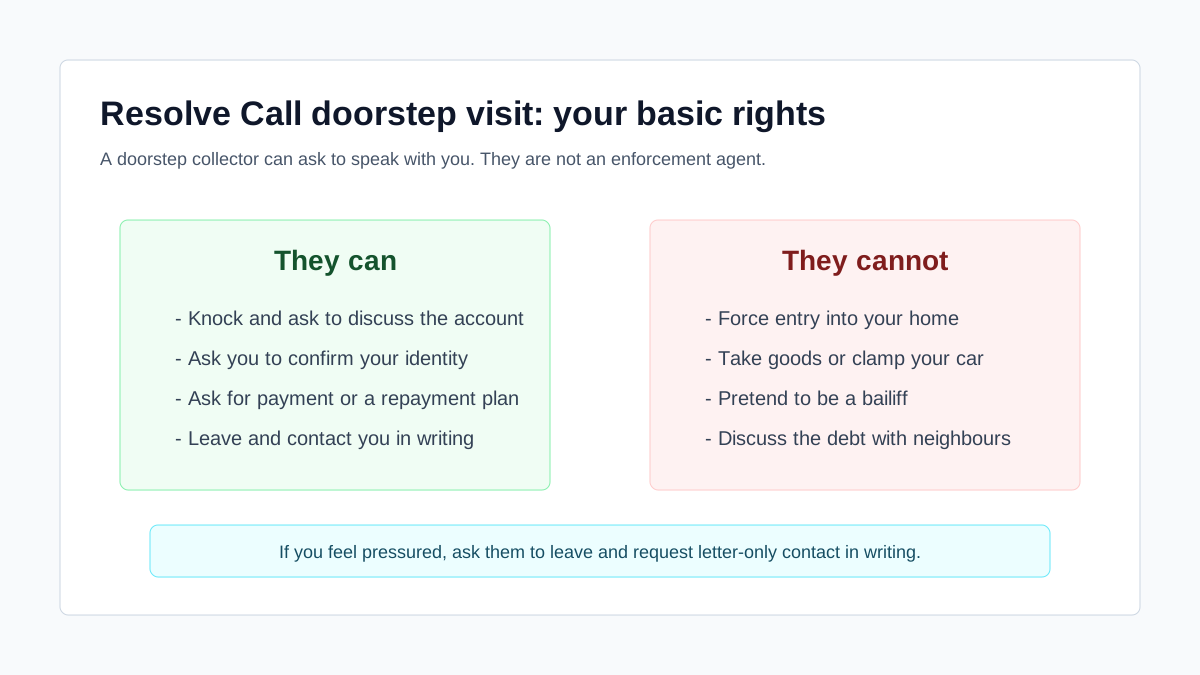
What Resolve Call agents CAN’T do:
- Force entry to your home
- Enter without your permission
- Take your belongings
- Clamp your car
- Threaten you with seizure of goods
- Stay on your property if you ask them to leave
- Speak to your neighbours about your debt
What you CAN do:
- Refuse to open the door
- Ask them to leave (they must leave immediately)
- Request letter-only contact to stop all visits and calls
- Report them to the FCA if they overstep
Resolve Call vs Actual Bailiffs — The Difference #
Resolve Call Agents:
- Private citizens representing a commercial interest
- No right to enter your home
- Can’t seize belongings
- Must leave if you ask them to
- Regulated by FCA
- Can only negotiate payment
Actual Bailiffs (Enforcement Agents):
- Officers of the court with legal enforcement powers
- Can enter your home (in specific circumstances with a court order)
- Can seize belongings to sell at auction
- Don’t have to leave (if they have a valid warrant)
- Regulated by Ministry of Justice / Civil National Business Centre
- Can enforce court judgments
The only way Resolve Call can get bailiffs involved:
- They take you to court
- They get a County Court Judgment (CCJ) against you
- You fail to pay the CCJ
- They apply for bailiff enforcement
This takes months and costs them money. Most debt collectors prefer negotiation.
Resolve Call Doorstep Visits — What Actually Happens #
Resolve Call still uses doorstep agents — a legacy from their days as Scotcall (2004-2015), when they were one of the UK’s biggest field collection operations.
The “reconnection” model:
Agents arrive at your address with a handheld device. Their goal is to:
- Confirm you live there
- Get you to speak to the Paisley call centre (via the device)
- Set up a “promise to pay” or payment plan on the spot
When do they visit?
Visits should be between 8am and 9pm. If they arrive outside these hours, it’s a breach of FCA rules.
What do people say about these visits?
Reviews are mixed. Some say agents were “empathetic” and “helpful” in setting up affordable plans. Others describe them as “intimidating” and “shady.”
Some Trustpilot reviews mention agents:
- Speaking to neighbours (which is a data protection breach)
- Returning multiple times despite being asked to stop
- Pressuring for immediate payment
Your rights during a doorstep visit:
- You don’t have to open the door. They can’t force entry.
- You can ask them to leave. They must leave immediately.
- You can request letter-only contact. Write to Resolve Call at their Paisley address (details below) and ask them to stop all phone calls and visits. They must comply.
- They can’t speak to your neighbours. If they do, it’s a breach of GDPR. Complain to the ICO.
If you want to engage:
Ask for their ID, get their name, and take a photo if you want. Don’t feel pressured to agree to anything on the spot. You can say you need time to check your finances and will call them.
What to Do If Resolve Call Contacts You #
Step 1: Don’t panic
They’re not bailiffs. They can’t take your stuff or force entry to your home.
Step 2: Don’t ignore it
Ignoring debt collectors doesn’t make them go away. It can escalate to court action and a CCJ on your credit file.
Step 3: Check if the debt is actually yours
Mistakes happen. Debt collectors sometimes chase:
- Debts you’ve already paid
- Debts belonging to a previous tenant or someone with a similar name
- Debts you genuinely don’t recognise
Step 4: Request proof of debt
Write to Resolve Call and ask for:
- A copy of the original credit agreement
- Proof that the debt has been assigned to them (if they bought it)
- A full breakdown of the amount owed
Send this request by recorded delivery to: 1 Smithhills Street, Paisley, PA1 1EB
They must provide this. If they can’t, they shouldn’t be chasing you.
Step 5: Check if it’s statute-barred
If the debt is old, it might be “statute-barred” (see next section). If it is, you don’t legally have to pay it.
Step 6: Negotiate if you owe it
If the debt is yours and it’s valid, negotiate. Resolve Call bought it for pennies per pound, so they’ll often accept a reduced settlement.
Offer what you can afford — even if it’s 30-50% of the total. Many people settle for less than the full amount.
Step 7: Consider an IVA if you have multiple debts
If Resolve Call is one of several unaffordable debts, an IVA may stop direct contact for included qualifying debts once approved. Compare it with other options before choosing a formal insolvency route.
Is Your Resolve Call Debt Statute-Barred? #
“Statute-barred” means the debt is too old for the creditor to take you to court over it.
Time limits:
- England and Wales: 6 years from the last payment or written acknowledgment (Limitation Act 1980)
- Scotland: 5 years (Prescription and Limitation (Scotland) Act 1973)
- Northern Ireland: 6 years
WARNING: If you make ANY payment or acknowledge the debt in writing, the clock restarts.
Resolve Call and old debts:
Resolve Call is specifically flagged in forums for chasing old, statute-barred debts. Because they buy debt portfolios cheaply, they’ll chase anything — even if it’s ancient.
If your debt is statute-barred:
- Write to Resolve Call and tell them it’s statute-barred
- Ask them to stop contacting you
- Keep a copy of your letter
- Don’t make any payment or acknowledge you owe the debt
They should stop. If they don’t, complain to the FCA (their regulator).
How to check:
Look at:
- When you last made a payment
- When you last wrote to the creditor acknowledging the debt
- Bank statements, old letters, emails
If it’s been over 6 years (or 5 in Scotland) with no contact, it’s likely statute-barred.
Can Resolve Call Take You to Court? #
Yes. If you owe the debt and don’t pay, Resolve Call can apply for a County Court Judgment (CCJ).
What happens:
- They file a claim at your local county court
- You receive a “claim form” in the post
- You have 14 days to respond
- You can either:
- Admit the debt and ask to pay in instalments
- Dispute the claim (if you don’t think you owe it)
- If you don’t respond, they’ll get a default judgment against you
CCJ consequences:
- Stays on your credit file for 6 years
- Makes it very hard to get credit, loans, or mortgages
- Can lead to bailiff enforcement if you don’t pay it
- In Scotland, enforcement is called “diligence” (slightly different process)
Why most debt collectors don’t bother with court:
It costs them money. Court fees, admin, legal costs. They’d rather negotiate a payment plan.
But if you ignore them completely, they may decide court is the only option.
How to Stop Resolve Call with an IVA #
An IVA (Individual Voluntary Arrangement) is a legally binding agreement to pay what you can afford for 5 years. After that, remaining debt is written off.
How it stops Resolve Call:
- You apply for an IVA through an insolvency practitioner
- Your creditors (including Resolve Call) vote on the proposal
- If 75% (by debt value) approve, it’s binding on ALL creditors
- Resolve Call must stop all contact — no calls, letters, or visits
- You make one affordable monthly payment to your IP
- After 5 years, remaining debt is written off
Why Resolve Call often accepts IVAs:
They bought your debt for 2-10p per £1. Even if they only get back 20-30p per £1 through an IVA, they’re still making a profit.
Eligibility:
- £6,000+ total unsecured debt (across all creditors, not just Resolve Call)
- Regular income (employment or benefits)
- Able to afford at least £90-100 per month
Use our IVA calculator to check whether an IVA may be suitable before agreeing payments you cannot afford.
Breathing Space — 60 Days’ Protection from Resolve Call #
Breathing Space is a government scheme that gives you 60 days of protection from creditors while you sort out a debt solution.
What it does:
- Resolve Call must pause ALL collection activity
- No phone calls, letters, doorstep visits, or legal action
- Interest and charges freeze
- Gives you time to arrange an IVA or other solution
How to apply:
You need to apply through an authorised debt advisor (like Citizens Advice or StepChange). It’s free.
Mental Health Crisis Breathing Space:
If you’re receiving mental health crisis treatment, you can get longer protection. It lasts as long as your treatment plus 30 days.
More info: Breathing Space scheme on GOV.UK
“Resolve Call Solicitors” — Is This a Real Law Firm? #
No. There is no separate law firm called “Resolve Call Solicitors.”
Some letters come on “Resolve Call Solicitors” letterhead. This is an internal legal department using a legal-sounding name to make things seem more serious.
Why it matters:
A letter from “Resolve Call Solicitors” is NOT the same as a court summons. It’s still just a debt collection letter.
How to check:
Search the Solicitors Regulation Authority (SRA) register from the SRA consumer problems page. If a firm isn’t listed, they’re not a regulated law firm.
Resolve Call does have in-house legal staff, but they’re employees of the debt collection agency — not an independent law firm.
The Andrew J Fenny Address — Why Other Websites Have This Wrong #
Many debt advice websites list Resolve Call’s address as:
3-4 Dudley Court, Manor Walks Shopping Centre, Cramlington, Northumberland, NE23 6QW
This is WRONG.
This was the registered office of Andrew J Fenny & Co Limited (company number 10874380), which acted as an administrative vehicle for Resolve Call’s English operations.
Andrew J Fenny & Co was dissolved on 22 December 2020.
The Cramlington address is dead. Letters sent there won’t reach Resolve Call.
The correct address is:
1 Smithhills Street, Paisley, PA1 1EB
This has been the active head office since 2022. Other websites haven’t updated their info.
Who Owns Resolve Call? The Corporate History #
Resolve Call has a long history and has been through multiple name changes. Understanding this explains why old debts resurface under unfamiliar names.
Timeline:
| Year | Company Name | Key Events |
|---|---|---|
| 1990 | Sectorlarge Limited | Incorporated (SC127277) |
| 1990s | Shieldaig Enterprises Limited | First rebrand |
| 2004 | Scotcall Limited | Built UK’s biggest doorstep collection network |
| 2015 | Fidelite Credit Management Limited | Move toward “white-label” services |
| 2017 | Resolvecall Limited | Current name (focus on “resolution”) |
| 2022 | Acquired by J.C. Flowers & Co. | New York PE firm takes control |
What the J.C. Flowers acquisition means:
James Christopher Flowers is a Wall Street private equity investor. His firm specialises in distressed financial assets and debt portfolios.
Since the 2022 acquisition:
- Resolve Call has more capital to buy larger debt portfolios
- They’ve expanded operations (moved to a larger Paisley office)
- Field agent activity has increased
Previous owners (David Stevenson, Brenda Stevenson, Evelyn Turner) all departed in early 2022 when J.C. Flowers took control.
The Scotcall legacy:
Between 2004 and 2015, as Scotcall, this firm was one of the UK’s biggest doorstep debt collectors. That field agent network is still their competitive advantage today.
If you had a debt with Scotcall or Fidelite, it’s now with Resolve Call. Same company, different name.
How to Complain About Resolve Call #
Step 1: Complain to Resolve Call directly
Write to: Resolve Call Complaints Department 1 Smithhills Street Paisley PA1 1EB
Include:
- Your reference number (from their letters)
- Full details of your complaint
- Dates and times of incidents
- Names of any agents involved
They should respond within 8 weeks.
Step 2: Escalate to the Financial Ombudsman Service
If you’re not satisfied with Resolve Call’s response, contact the FOS:
- Website: financial-ombudsman.org.uk
- Phone: 0800 023 4567
The FOS is free and independent. They can order Resolve Call to compensate you if they’ve treated you unfairly.
Step 3: Report data protection breaches to the ICO
If Resolve Call has:
- Spoken to your neighbours about your debt
- Contacted the wrong person
- Shared your data without permission
Report them to the Information Commissioner’s Office (ICO):
- Website: ico.org.uk
- Phone: 0303 123 1113
Include Resolve Call’s FCA reference number: 713946
Resolve Call Reviews and Reputation #
Resolve Call’s reputation is mixed. Reviews are polarised between positive experiences with their online portal and negative experiences with field agents.
Positive feedback:
- Online payment portal (myresolvecall.co.uk) is easy to use
- Some telephone staff described as “empathetic” and “understanding”
- Affordable payment plans offered
- Quick problem resolution for some customers
Negative feedback:
- Chasing statute-barred (old) debts
- Doorstep visits described as “intimidating” or “shady”
- Agents questioning neighbours (GDPR breach)
- Automated texts and calls even when payment plans are in place
- Contacting wrong people (previous tenants, relatives)
“Scam” perception:
Some people think Resolve Call is a scam because:
- The website looks dated
- Unexpected texts or doorstep visits cause alarm
- Debts resurface under an unfamiliar name (Scotcall → Fidelite → Resolve Call)
Resolve Call is NOT a scam. They’re a legitimate, FCA-authorised debt collector. But their methods can feel aggressive.
Trustpilot rating: Varies — check current reviews on Trustpilot.
Contact Resolve Call #
Address: Resolve Call 1 Smithhills Street Paisley PA1 1EB
Phone: Check your letter for the correct number (it varies by account)
Website: resolvecall.co.uk
Online payment portal: myresolvecall.co.uk (you’ll need your reference number)
To request letter-only contact: Write to the Paisley address and ask them to stop all phone calls and doorstep visits. They must comply.
FCA registration: Firm Reference Number: 713946 Check the FCA register
If you’re struggling with debt and want to compare your options, use our free IVA calculator to check whether an IVA may be suitable.
Frequently Asked Questions #
Who are Resolve Call? #
Resolve Call is a debt collection agency based in Paisley, Scotland. They chase unpaid debts — either on behalf of creditors like banks and utilities, or for debts they’ve bought outright. They’re owned by J.C. Flowers & Co., a New York private equity firm.
Is Resolve Call legitimate or a scam? #
Resolve Call is legitimate. They’re authorised by the Financial Conduct Authority (FCA reference: 713946). They’re not a scam, but their doorstep visits and texts can feel aggressive or unexpected.
Can Resolve Call send bailiffs to my home? #
No. Resolve Call are debt collectors, not bailiffs. They have no power to force entry, seize belongings, or clamp your car. The only way they can get bailiffs involved is by taking you to court, getting a CCJ, and then applying for enforcement — which takes months.
Why is Resolve Call contacting me about an old debt? #
Either they bought your old debt from a bank or lender, or they’re collecting it on commission. Resolve Call buys debt portfolios at 2-10p per £1, so they chase debts other companies have given up on. Old debts from “Scotcall” or “Fidelite” are now with Resolve Call — same company, different names.
Can I ignore Resolve Call? #
Not recommended. Ignoring them won’t make the debt go away. They can take you to court and get a County Court Judgment (CCJ), which stays on your credit file for 6 years. It’s better to check if the debt is yours, and if so, negotiate or consider an IVA.
Is my Resolve Call debt statute-barred? #
If it’s been over 6 years (England/Wales/NI) or 5 years (Scotland) since you last made a payment or acknowledged the debt in writing, it’s likely statute-barred. That means they can’t take you to court. Tell them in writing and ask them to stop contacting you.
Can an IVA include Resolve Call debt? #
Yes. Resolve Call debts are usually unsecured and may be included in an IVA if the arrangement is suitable and approved. If you have wider unaffordable debt, use the IVA calculator to check whether an IVA may fit your situation.
How do I stop Resolve Call contacting me? #
Write to them at 1 Smithhills Street, Paisley, PA1 1EB and request “letter-only contact.” They must stop all phone calls and doorstep visits. If you want to stop them completely, apply for Breathing Space (60 days’ protection) or arrange an IVA.
What is Resolve Call Solicitors? #
It’s not a separate law firm. “Resolve Call Solicitors” is an internal legal department using a legal-sounding name on letters. Check the SRA register — no separate firm exists. A letter from them is still just a debt collection letter, not a court summons.
Can Resolve Call take me to court? #
Yes. If you owe the debt and don’t pay, they can apply for a County Court Judgment (CCJ). This stays on your credit file for 6 years and can lead to bailiff enforcement if you don’t pay it. Most debt collectors prefer negotiation over court, but ignoring them completely may force their hand.
Need help with Resolve Call debt? Use our free IVA assessment to check whether an IVA may fit your wider debt situation.